 Metriq


The easiest way to get 10,000 steps a day is to split it up: about 4,000 to 5,000 from everyday life, plus three walks of 15 to 20 minutes. 10,000 steps is about 4.4 miles, or 1 hour 30 minutes of walking in total, so few people get there in one go. Spread across the day, it fits around work and family. Here is how to plan it, and how to build up if you are not there yet.
What 10,000 steps looks like
- Distance: about 4 to 5 miles (7 to 8 km), depending on your stride. See how many steps are in a mile.
- Time: about 1 hour 30 minutes of walking at a normal 3 miles an hour, or about 1 hour 15 minutes at a brisk 3.5 miles an hour.
- Calories: roughly 300 to 500 above what you burn at rest. See calories in 10,000 steps.
A sample day
| When | What | Steps |
|---|---|---|
| All day | Getting around home, work and shops | 4,000 to 5,000 |
| Morning | 15-minute walk, or walk part of the commute | about 1,500 |
| Lunch | 20-minute walk | about 2,000 |
| Evening | 15-minute walk after dinner | about 1,500 |
| Total | about 9,000 to 10,000 |
Not every day has to look like this. A long weekend walk can make up for a busy Tuesday: a week that averages 10,000 still counts.
Small changes that add steps
- Walk after meals. A short walk after eating also helps with blood sugar. See walking after eating.
- Walking meetings and calls. A 30-minute call on your feet is about 3,000 steps.
- Park farther away, or get off the bus a stop early.
- Take the stairs for a floor or two.
- Pace while you wait for the coffee, the microwave or a delayed train.
- On bad-weather days, use one of our 20 indoor walking ideas, or a treadmill: here is how to make treadmill steps count.
Not at 10,000 yet? Build up
Find your current average in the Health app (Steps, then W for the past week), then add about 500 steps a day each week. From 5,000, that gets you to 10,000 in about ten weeks. Our 4-week plan for beginners walks you through the start.
And you do not have to stop short of 10,000 to be doing well: a 2025 review found that 7,000 steps a day was linked to most of walking's benefit for health. See average steps per day.
What keeps you going
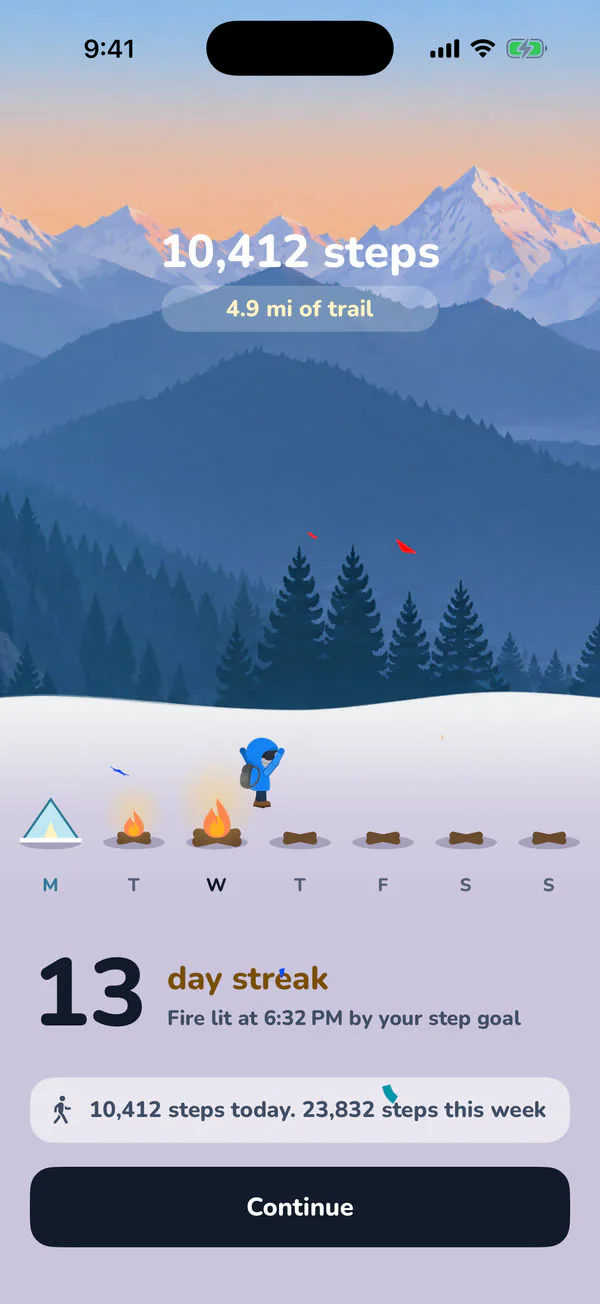
- A streak. Counting days in a row is a strong habit builder. In Metriq, set your daily goal to 10,000 (or the number you are building toward), and every day you reach it your streak grows by one.
- Friends. A week-long step competition makes the evening walk a lot more likely. Metriq competitions are free for up to 10 people for up to 7 days.
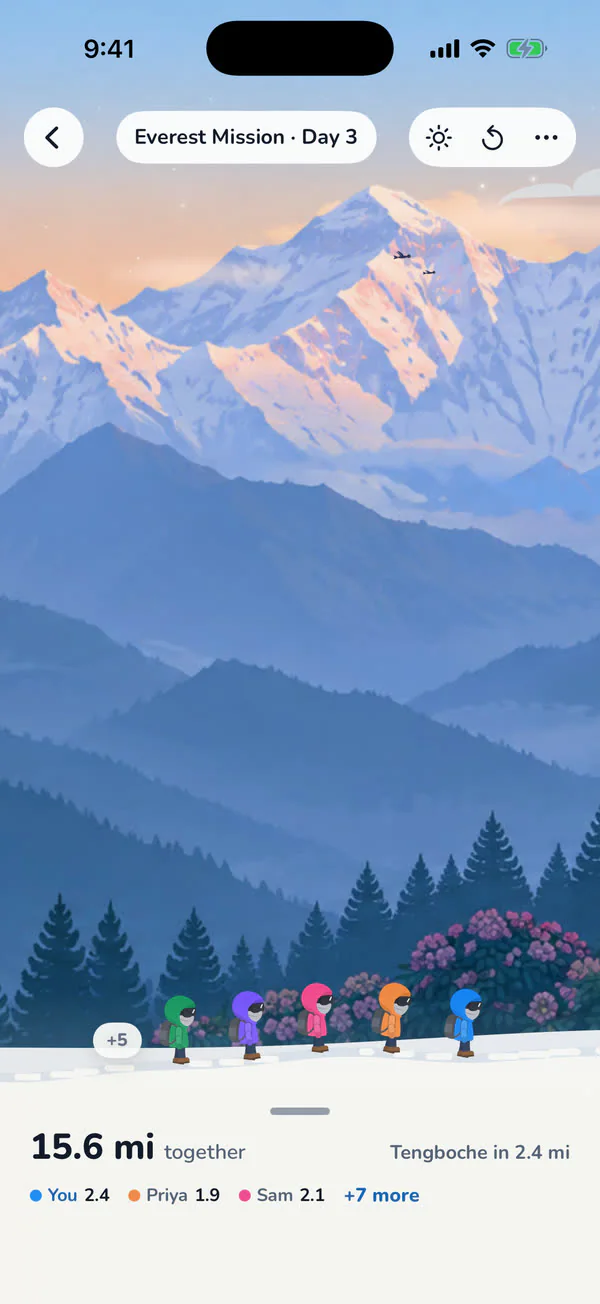
- A goal bigger than a day. Walk the 44 miles from Lukla to the summit of Everest, a few thousand steps at a time, alone or with friends.
Want to see your own numbers? The step calculator turns any step count into miles and time for your height.
Frequently asked questions
How long does it take to walk 10,000 steps?
About 1 hour 30 minutes at a normal pace of 3 miles an hour, or about 1 hour 15 minutes at a brisk 3.5 miles an hour. Everyday movement usually covers 4,000 to 5,000 of them.
How many miles is 10,000 steps?
About 4 to 5 miles (7 to 8 km) for most people, depending on stride length.
How can I get 10,000 steps a day at home?
Walk laps of your home during calls, take the stairs often, pace while you wait, or use a treadmill or walking pad with your iPhone in your pocket.
Do I need 10,000 steps a day?
No. A 2025 review found 7,000 steps a day was linked to most of walking's health benefit. 10,000 is a fine goal if you enjoy it.