 Metriq


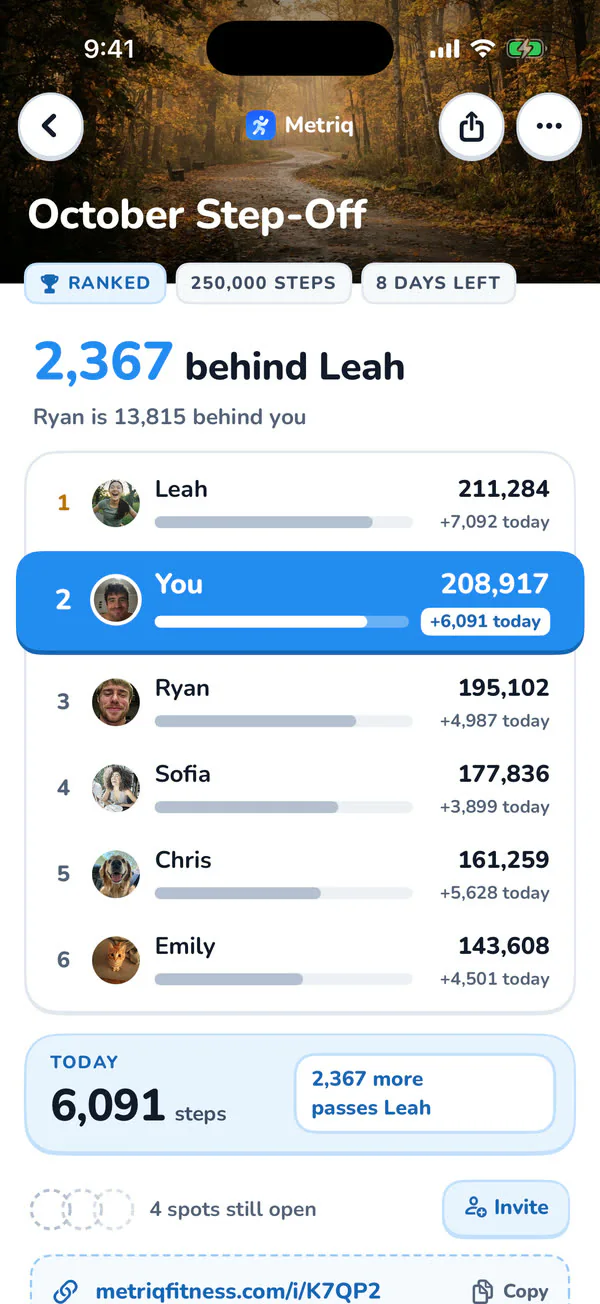
An office step challenge is one of the cheapest wellness ideas there is, and one of the easiest to get wrong. Run it as a pure leaderboard and the same three people win while everyone else quietly stops. Run it as a team effort and the whole office talks about it for weeks.
Make it a team effort first
Coworkers vary much more than friends do. A colleague training for a marathon and a colleague with a bad knee should both feel they matter. That is why the best workplace challenges are missions: one shared goal that everyone's steps add to. Nobody is ranked, so there is nothing to be embarrassed about, and every walk to the train counts.
Want some competition? Split into teams of five to ten and give every team the same mission. The first team to finish wins. Each team will want a name: here are 60+ step challenge team names.
Pick a goal people can picture
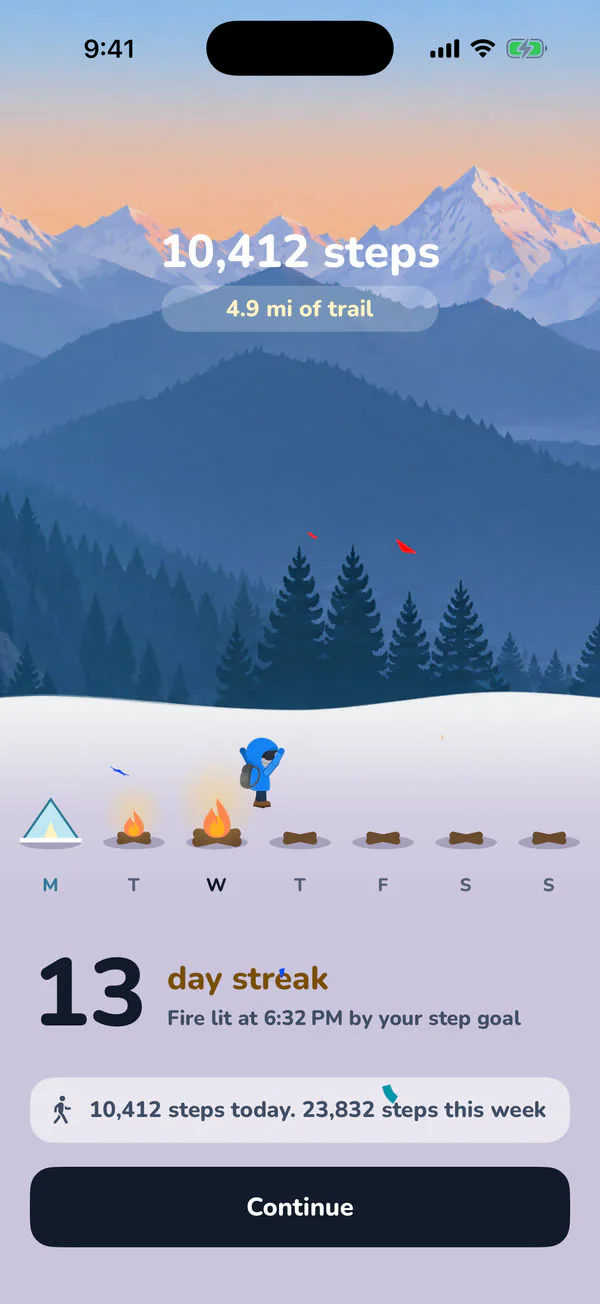
"2 million steps" is hard to imagine. "Walk to the top of Everest" is not. A famous trail gives the group a story to follow: this week Base Camp, next week the South Col. Metriq's campaigns turn the walk into painted places you unlock one by one:
- Mount Fuji, 21 miles (34 km) from Lake Kawaguchi to the summit: a few days for a small team, about a week on your own.
- Everest, 44 miles (71 km) from Lukla to the summit.
- The Inca Trail, 43 miles (69 km) over the Salkantay pass to Machu Picchu.
All three are free. See the virtual hiking challenge guide for how long each takes, and Metriq for work for how teams use it.
Get the length right
Two to four weeks works for most offices. Shorter and people who were away on day one never catch up; longer and interest fades. If you want something running all year, run short rounds back to back. Metriq Pro can repeat a round on its own, so the organizer does not have to set up a new one every month.
Respect privacy
Step counts are health data. Make joining optional, never tie it to reviews or benefits, and pick a tool that only shows what the challenge needs. Metriq reads from Apple Health but never writes to it, never sells data and never uses it for ads; people see the challenge's score, not each other's health records.
Prizes
Recognition beats money. A shout-out in the all-hands, a team lunch, or the winning team choosing the next trail all work well. If you do offer prizes, give some to effort, such as "longest streak", not only to the most steps.
A message you can send
Who's in for a walk up Mount Fuji? 🗻 Starting Monday we're walking the 21 miles from Lake Kawaguchi to the summit as a team, using the steps already on our phones. Nothing to log, and it's free. Tap the link to join: [your invite link]
Frequently asked questions
What if some people do not have an iPhone?
Metriq is iPhone only for now, since it scores from Apple Health. For a mixed office, check what phones people use before you pick a tool. Team spread across cities? See how to run a remote team step challenge.
How many people can join?
Up to 10 people per competition on the free plan, and up to 100 with Metriq Pro.
Do gym workouts count?
Choose exercise minutes as the metric and they do, along with cycling, swimming and anything else your phone or Apple Watch records as exercise.