 Metriq

A virtual hiking challenge maps your everyday walking onto a real trail. The walk to the shop and the dog walk all move you along, and instead of a step count you get a place: today Namche Bazaar, next week Base Camp. It is one of the easiest ways to keep walking when a number alone stops being enough.
The three trails at a glance
| Trail | Distance | About | Places | Top | At 10,000 steps a day |
|---|---|---|---|---|---|
| Mount Fuji | 21 mi / 34 km | 47,000 steps | 10 | 3,776 m | about 5 days |
| Inca Trail | 42.9 mi / 69 km | 97,000 steps | 16 | 4,950 m | about 10 days |
| Everest | 44.3 mi / 71 km | 100,000 steps | 16 | 8,849 m | about 10 days |
Step counts assume about 2,250 steps a mile; yours may differ (see the table by height).
Mount Fuji: the best first climb
Start at Oishi Park on Lake Kawaguchi, pass the Kachi Kachi Ropeway, stop at the Chureito Pagoda and the Fuji Sengen Shrine, then climb from Umagaeshi past the Goraikokan sunrise hut to Kengamine Peak, the true summit. At 21 miles, a solo walker at 10,000 steps a day is at the top within a week, which makes it a great first challenge for a group. See every stop in how many steps to climb Mount Fuji, or see the Mount Fuji trail.
The Inca Trail: the most varied
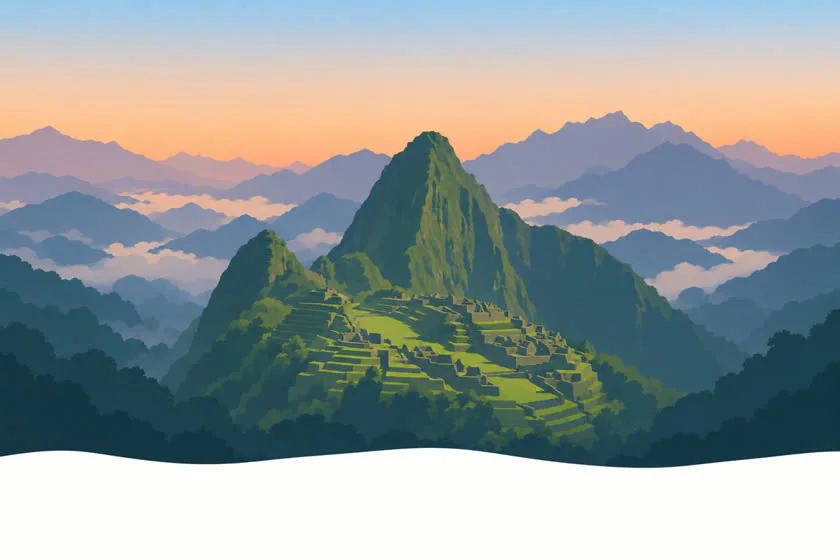
This route begins at Soraypampa, passes Humantay Lake, crosses the 4,950 m Salkantay pass, then joins the classic Inca Trail over Dead Woman's Pass, past the ruins of Runkurakay, Sayacmarca and Wiñay Wayna, through the Sun Gate and down to Machu Picchu. It is the only one of the three that ends lower than its highest point. See every stop in how many steps the Inca Trail is, or see the Inca Trail.
Everest: the big one
From the airstrip at Lukla across the Hillary Bridge to Namche Bazaar, Tengboche and Base Camp, then up the Khumbu Icefall and through the high camps to the South Col, the Hillary Step and the summit at 8,849 m. Every stop is in how many steps to climb Everest. See the Everest trail.
Three ways to walk a trail
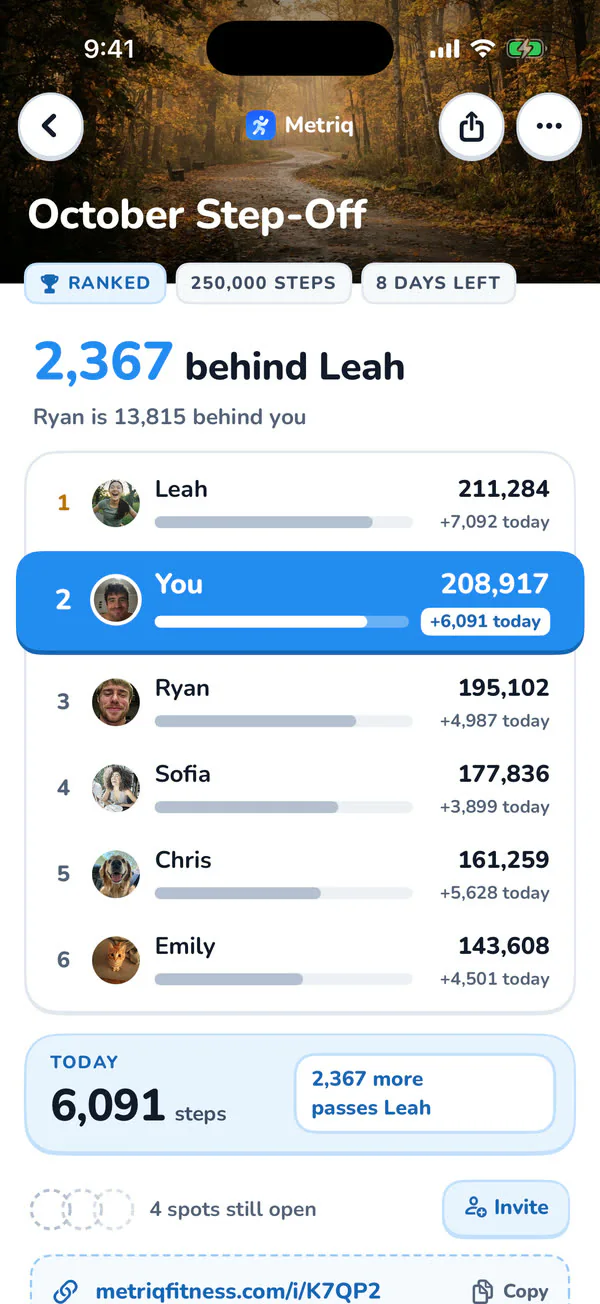
- Solo. The whole trail at your own pace. Your hiker catches up to today every time you open the app.
- Mission. Everyone's walking adds up to one walk. Great for families and offices where fitness levels differ.
- Race. Same trail, same start line, and the first one to the end wins.
What makes a virtual trail stick
- Places, not percentages. Reaching Tengboche is more memorable than reaching 41%.
- Something to see. In Metriq every place opens its own painting when you get there.
- Company. Your friends appear on the height chart as they walk, so you can see who is just behind you.
- No logging. Distance comes from Apple Health, from your iPhone and your Apple Watch.
Weighing a paid challenge with a medal in the post? See Metriq vs The Conqueror.
Frequently asked questions
Do I have to walk, or does running count?
Running counts. The trail moves by the walking and running distance in Apple Health.
What if I stop for a few days?
Nothing is lost. A solo trail waits for you, and your hiker picks up where you left off.
Are more trails coming?
Yes. New trails are on the way; the app shows them as they open.