 Metriq


Walking helps with weight loss by adding to the calories you use every day, in a way most people can keep up for months and years. On its own it rarely makes a large difference quickly. Combined with changes to what you eat and drink, and kept up as a daily habit, it is one of the most practical tools there is. This guide sets out a gradual plan, the honest maths, and what to expect.
This is general information, not medical advice. If you have a medical condition, are pregnant, take medication that affects your weight or heart rate, or are starting from very little activity, talk to your doctor before you begin.
How weight loss works, plainly
Your weight changes with the balance between the energy you take in from food and drink and the energy you use. As the NIH's National Institute of Diabetes and Digestive and Kidney Diseases puts it, to lose weight you must burn more calories than you take in. Walking works on the "use" side.
The CDC is clear about how the two sides compare: on its physical activity and weight page it says most weight loss comes from eating fewer calories, while regular physical activity is what helps keep weight off. Walking and eating habits work best together.
Why walking helps
- It is sustainable. It needs no gym, no kit beyond comfortable shoes, and little recovery, so you can do it every day. The NHS calls walking one of the easiest ways to get more active, lose weight and become healthier.
- It adds up. 3,000 extra steps a day is about 90 calories above resting for a 150 lb person, small on one day but around 620 over a week. See the maths in how many steps a day to lose weight.
- It counts toward the guidelines. The CDC says adults need 150 minutes of moderate-intensity activity a week, such as brisk walking, plus muscle-strengthening on at least 2 days. That could be 30 minutes, 5 days a week.
- It helps keep weight off. The CDC notes you may need more than the recommended minutes a week to maintain your weight once you have lost some.
A gradual walking plan
Start from your own baseline: in the Health app, open Steps and look at your average for a normal week. Then add a little at a time. Extra minutes are at an ordinary 3 mph; extra calories are above resting, for a 150 lb (68 kg) person, worked out with the formula in calories burned walking.
| Weeks | Daily steps | Extra walking a day | About extra a week |
|---|---|---|---|
| 1 and 2 | Baseline + 1,000 | about 9 minutes | about 210 calories |
| 3 and 4 | Baseline + 2,000 | about 18 minutes | about 415 calories |
| 5 and 6 | Baseline + 3,000 | about 27 minutes | about 620 calories |
| 7 and 8 | Baseline + 4,000 | about 36 minutes | about 830 calories |
| After that | Hold, and raise only if it feels easy |
If a stage feels hard, stay on it for another week or two. Missing a day is fine; missing the habit is what to avoid. Heavier people burn more for the same steps, lighter people less: the walking calorie calculator gives your own figures. Many people end up around 8,000 to 10,000 steps a day, but the right number for you is the one you can keep.
Ways to fit the steps in: a walk after meals, a walking call, getting off the bus a stop early, a lap of the block before you sit down in the evening. Several 10-minute walks count just as well as one long one.
Pair it with food habits
You do not need a strict diet to make walking count, but it helps to avoid quietly eating the calories back. General habits that help most people (the CDC's steps for losing weight page also stresses specific goals, sleep and stress):
- Set small, specific goals you can keep, such as "a 15-minute walk after dinner, five days a week".
- Notice drinks: sugary drinks and alcohol add calories without filling you up.
- Do not treat a walk as permission for a large snack. A 30-minute walk burns about the calories in a small snack, not a meal.
- Keep regular meals with vegetables, fruit, whole grains and protein, and watch portion sizes.
- Sleep and stress matter too: the CDC lists enough sleep and stress management alongside eating and activity.
For a personal plan, the NIH's Body Weight Planner lets you put in your own details, and a doctor or registered dietitian can help with the food side.
What to expect
Expect slow, uneven progress. Weight goes up and down from day to day with water and food, so look at the trend over weeks, not the scale each morning. The CDC notes that people who lose weight at a gradual, steady pace are more likely to keep it off, and the NIDDK suggests that losing 5% of your body weight over 6 months may be a good first goal for adults with overweight or obesity.
You may have heard that "3,500 calories equals 1 pound". It is a rough rule, and it overestimates long-term loss: a 2011 study in The Lancet led by an NIH researcher showed it ignores how the body adapts as weight changes, and that weight responds to a change in eating slowly, over a year or more. So the extra calories in the table above are a guide to effort, not a promise of pounds.
Other changes often come sooner than the scale: walking further without getting out of breath, better sleep, more energy.
When to see a doctor
- Before you start, if you have heart, lung, joint or other medical conditions, are pregnant, or have been mostly inactive.
- If you feel chest pain, faintness, unusual shortness of breath, or joint pain that does not settle.
- If you are losing weight without trying, or worried about your weight or eating.
Stay accountable with Metriq
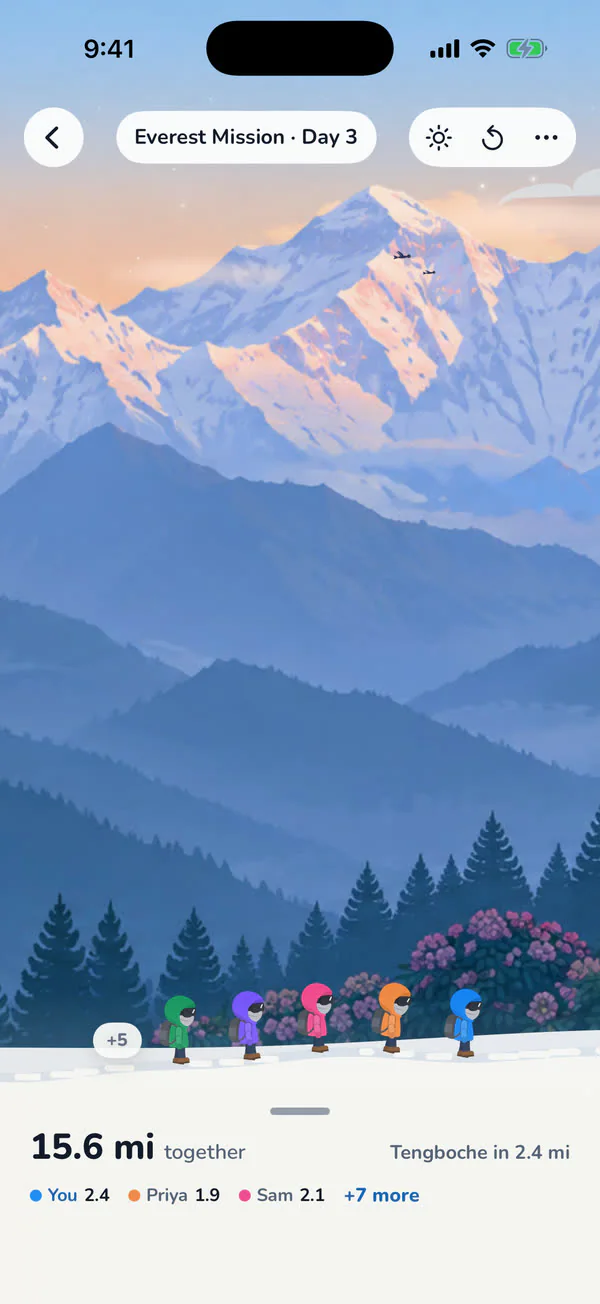
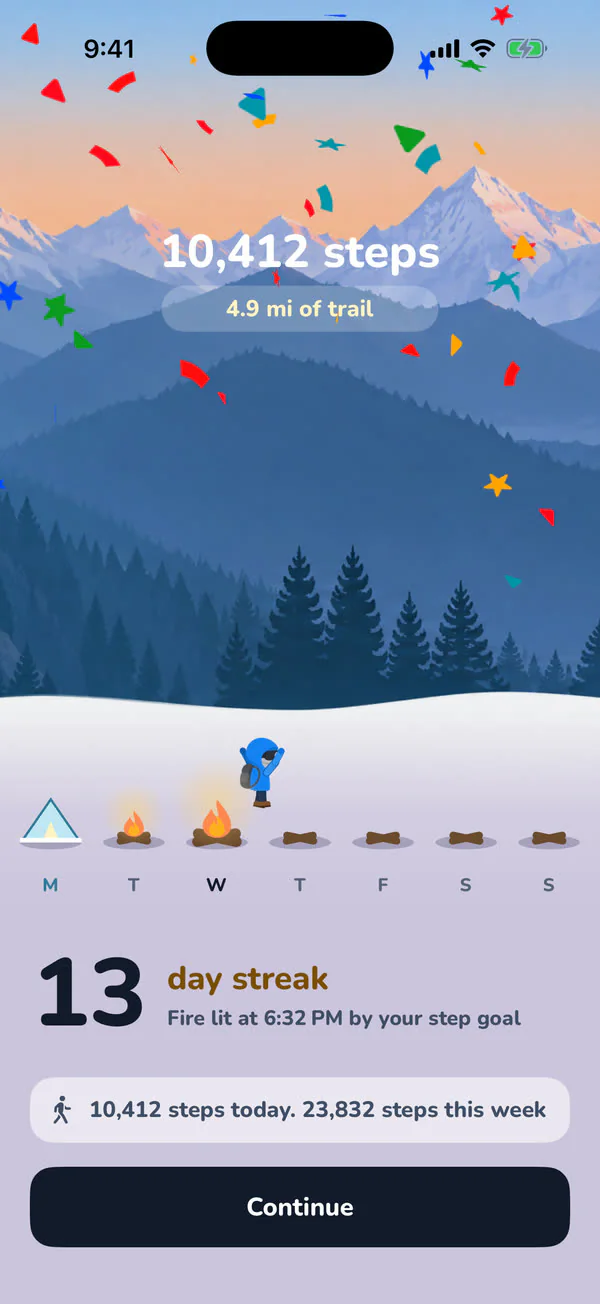
A plan works when you keep doing it. In Metriq you set your own daily goal, and every day you reach it your streak grows by one. With friends or family, create a Streak competition, where everyone tries to hit the bar every day, or a Mission, where everyone's steps add up to one shared goal and nobody is ranked, which suits people walking at very different levels. Metriq reads your steps from Apple Health, so there is nothing to type in.
Metriq is free on iPhone: join any competition, and create two at a time of up to 10 people and up to 7 days. Metriq Pro, at $32.99 a year or $6.99 a month, allows up to 100 people and any length. See the step challenge app page, or start with a 30-day walking challenge.
Frequently asked questions
Can you lose weight just by walking?
Some people do, but it is slower without changes to eating. The CDC says most weight loss comes from eating fewer calories, and that regular physical activity such as walking is what helps keep weight off. Walking and food habits together work best.
How long should I walk a day to lose weight?
Start with the CDC's guidance of 150 minutes of moderate activity a week, such as 30 minutes of brisk walking on 5 days. The CDC notes you may need more than that for weight loss unless you also change what you eat, so build up gradually.
Is it better to walk fast or walk longer?
Both add calories. Brisk walking burns more per minute, and longer walks burn more in total. Choose whichever you can keep doing; consistency over weeks matters more than any single walk.
Is 3,500 calories really one pound?
It is a rough rule that overestimates long-term weight loss, because the body adapts as weight changes. A 2011 Lancet study led by an NIH researcher found weight responds to a change in eating slowly, over a year or more.
More reading: how many calories 10,000 steps burn, how many steps a day to lose weight, and the step calculator to turn steps into distance and time.