 Metriq


To keep walking through winter, dress in thin layers you can open up, wear shoes with good grip, make yourself easy to see in the dark, and swap one long walk for two or three short ones on the coldest days. In winter the aim is simply to get out of the door a little every day, even if the walks are shorter.
Dress in layers
The CDC's advice for cold weather is to wear several layers of loose-fitting clothing, a water-resistant coat and boots, a hat, gloves or mittens, and a scarf over your face and mouth when it is very cold. For a walk, that usually means:
- A base layer that does not stay soaked with sweat. Wet clothing makes you cold much faster than dry.
- A warm middle layer, such as a fleece or a thin sweater.
- An outer layer that keeps out wind and rain.
- Hat, gloves and warm socks. Fingers, toes, ears and nose get cold first.
You warm up once you get going, so it is fine to feel a little cool for the first few minutes. Open a zip or take off gloves before you start sweating, rather than after.
Know the warning signs. The CDC lists redness or pain in the skin as a possible first sign of frostbite, followed by white or grayish-yellow skin, skin that feels firm or waxy, and numbness. Shivering, exhaustion, confusion and fumbling hands can be signs of hypothermia, which the CDC notes can happen even above 40°F (4°C) if you get chilled by rain or sweat. If you notice any of these, head indoors and get warm, and see the CDC's page for when to get medical help.
Footing on snow and ice
A fall on ice can stop you walking for weeks, so footing matters most. Workplace safety advice from OSHA is to take short steps and walk more slowly on snow and ice, so you can react when the ground changes, and to wear insulated, water-resistant boots with good rubber treads. The NHS gives similar advice: icy pavements can be very slippery, so wear shoes with a good grip.
- Pick cleared routes: main streets and gritted or salted paths over quiet side roads and grass.
- Keep your hands free and out of your pockets, so you can steady yourself.
- Watch for shiny patches, especially on bridges, steps, slopes and in the shade.
- On a really icy day, walk indoors instead. A missed outdoor walk is better than a fall. See our 20 ways to get steps indoors.
Daylight and being seen
In winter many people's walks happen in the dark, before or after work. A few habits help drivers and cyclists see you:
- Wear something bright in the daytime, and something reflective at night: a reflective band, vest or strip on your coat or bag.
- Carry a small light, or use your phone's torch, on unlit paths.
- Where there is no pavement or sidewalk, walk facing the oncoming traffic.
- Keep one ear free of headphones near roads.
The easiest fix is timing: if you can, move one walk into the middle of the day, when it is light and usually a little warmer. A 10-minute lunchtime walk is also about 1,000 steps for most people.
Warm up first
Cold muscles and joints can feel stiff for the first few minutes. Start slowly and build up to your normal pace over about five minutes, rather than setting off fast from the front door. Marching on the spot or walking up and down the stairs indoors for a minute before you leave also helps. Breathing very cold air can feel harsh: a scarf loosely over your mouth and nose can make it more comfortable.
If you have a heart or lung condition, such as asthma, cold air may affect you more. The NHS suggests you speak to your GP first if you have medical conditions or concerns, and that applies to winter walking too.
Short walks beat no walks
Winter is when a step habit is most likely to slip. Instead of one long walk you dread, plan short ones you can always manage:
- Two or three 10-minute walks add up to as much as one 30-minute walk, and you never get too cold.
- Walk after meals: a quick loop after lunch and dinner.
- Walk to one errand you would usually drive to.
- Lower your daily goal a little for winter rather than missing it. A goal you hit every day is worth more than a higher one you miss.
- Keep a fallback. On the worst days, get your steps indoors: stairs, a shopping centre, or walking during calls.
Every 1,000 steps is about 10 minutes of walking at a normal pace. Use the step calculator to see what your winter goal adds up to in distance and time.
Keep it going with other people
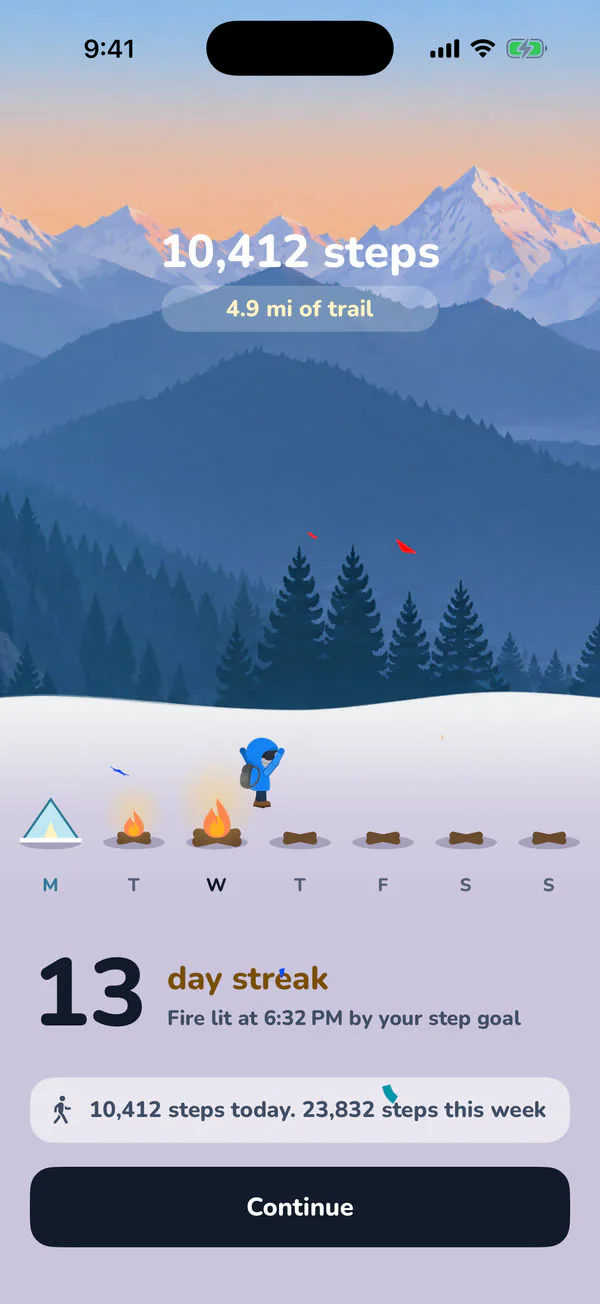
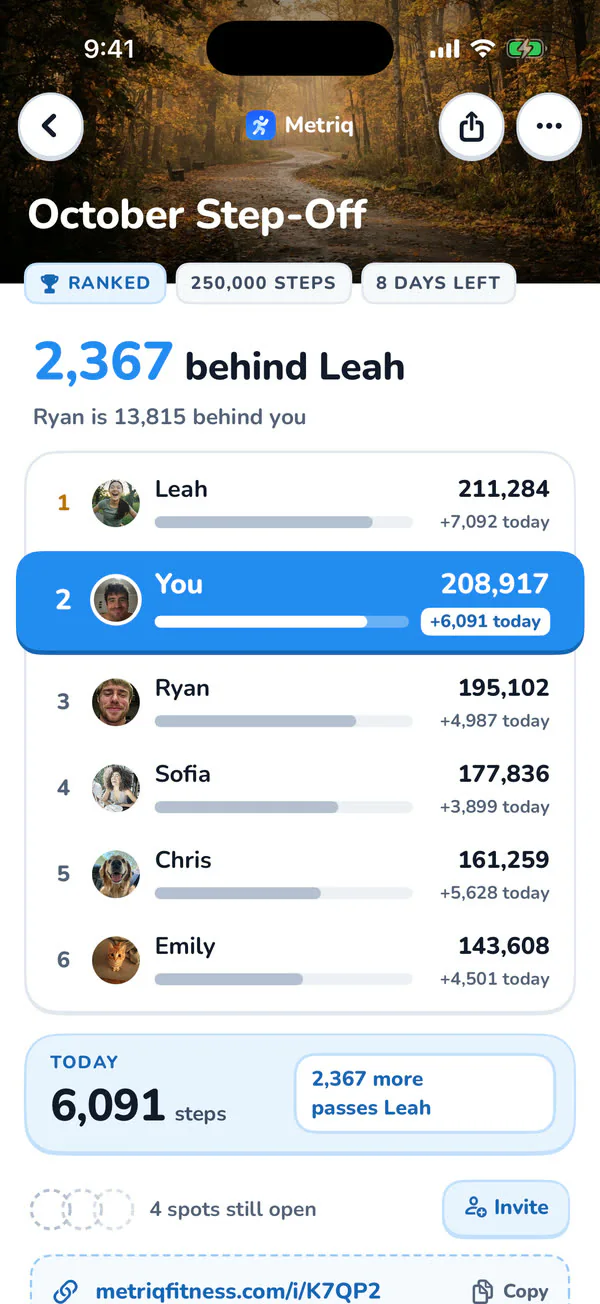
A daily streak and a group challenge are two of the best ways through a dark, cold month. In Metriq you set your own daily goal, and every day you reach it your streak grows by one and your hiker walks into camp. With friends, a Streak competition gives everyone the same daily goal, so nobody wants to be the one who skipped the walk because it was cold. Free Streaks run up to 7 days: run a new round each week. Or walk a virtual trail together, like Everest, a little each day.
Planning for the holidays? Try a holiday step challenge, or get ready for January with our New Year step challenge plan. To start a group, see the step challenge app page.
Frequently asked questions
Is it OK to walk in cold weather?
For most healthy adults, yes, if you dress in layers, cover your head, hands and feet, and watch your footing on ice. If you have a heart or lung condition, or any medical concerns, ask your doctor first.
What should I wear for a winter walk?
Several thin layers rather than one thick one, a wind- and water-resistant outer layer, a hat, gloves and warm socks, and shoes or boots with good grip. Add something reflective if you walk in the dark.
How do I walk safely on ice?
Take short steps, slow down, keep your hands free, and stick to cleared and salted paths. On a very icy day, get your steps indoors instead.
How can I keep my step count up in winter?
Plan two or three short walks a day instead of one long one, walk in daylight at lunchtime when you can, and have an indoor fallback for bad days. A daily streak with friends makes skipping a walk much harder.