 Metriq


A step challenge is a friendly contest in which a group of people count their steps over a set period, usually a week to a month, and compare the results. The winner might be whoever walks the most, whoever reaches a target first, or the whole group together if it hits a shared goal. Phones and fitness watches count the steps automatically, so the only real work is walking.
The five common types of step challenge
Almost every step challenge you will come across is one of these five shapes. They feel very different to play, so picking the right one matters more than picking the number.
| Type | How you win | Best for |
|---|---|---|
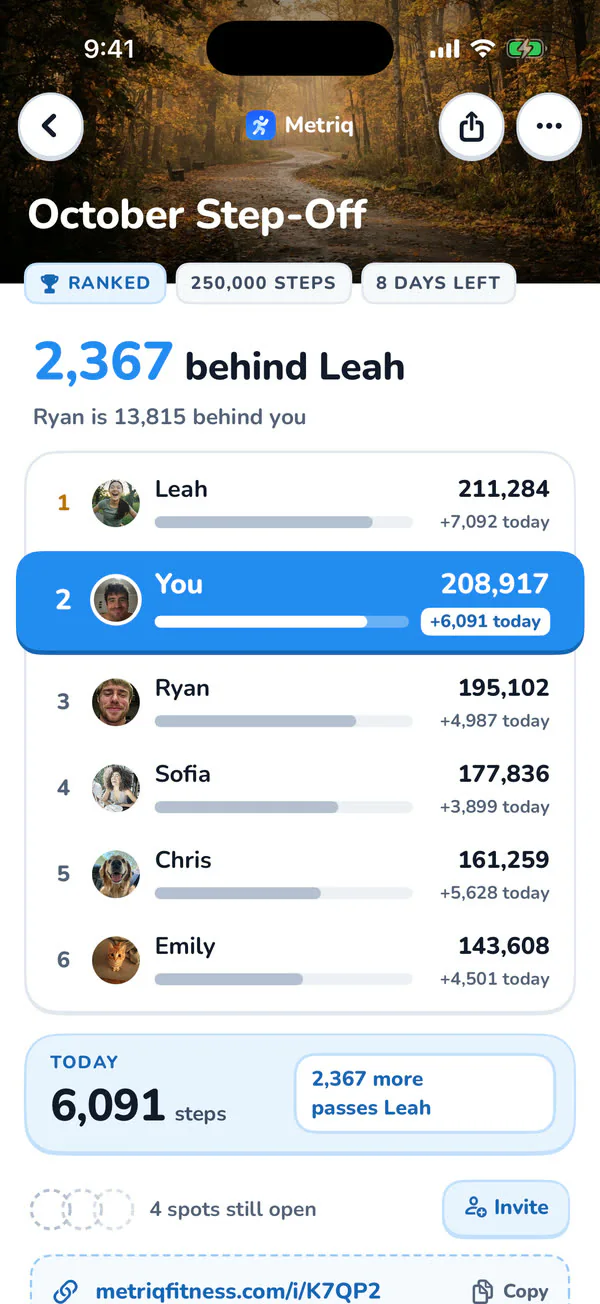
| Most steps | Highest total when the time runs out | Friends of similar fitness who like a leaderboard |
| Race to a target | First to reach a fixed number, such as 50,000 steps | Short, intense challenges that end on their own |
| Team goal | Everyone adds to one shared total | Families, offices and mixed-fitness groups |
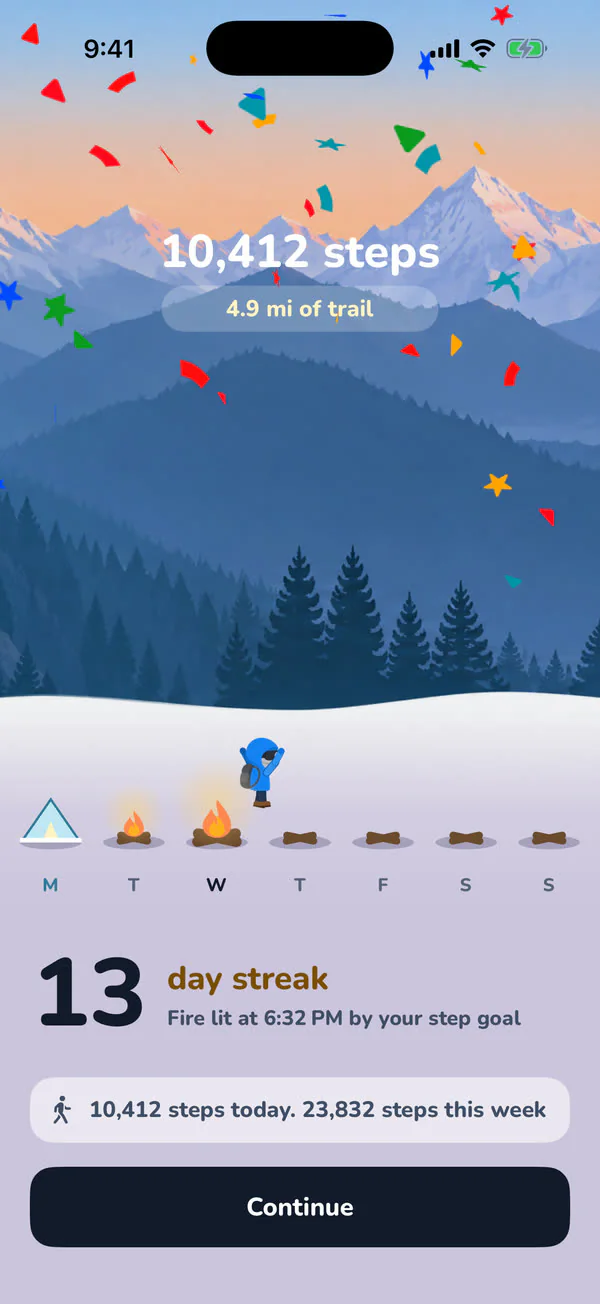
| Streak | Hit the same daily goal every day without a miss | Building a habit; rewards consistency over big days |
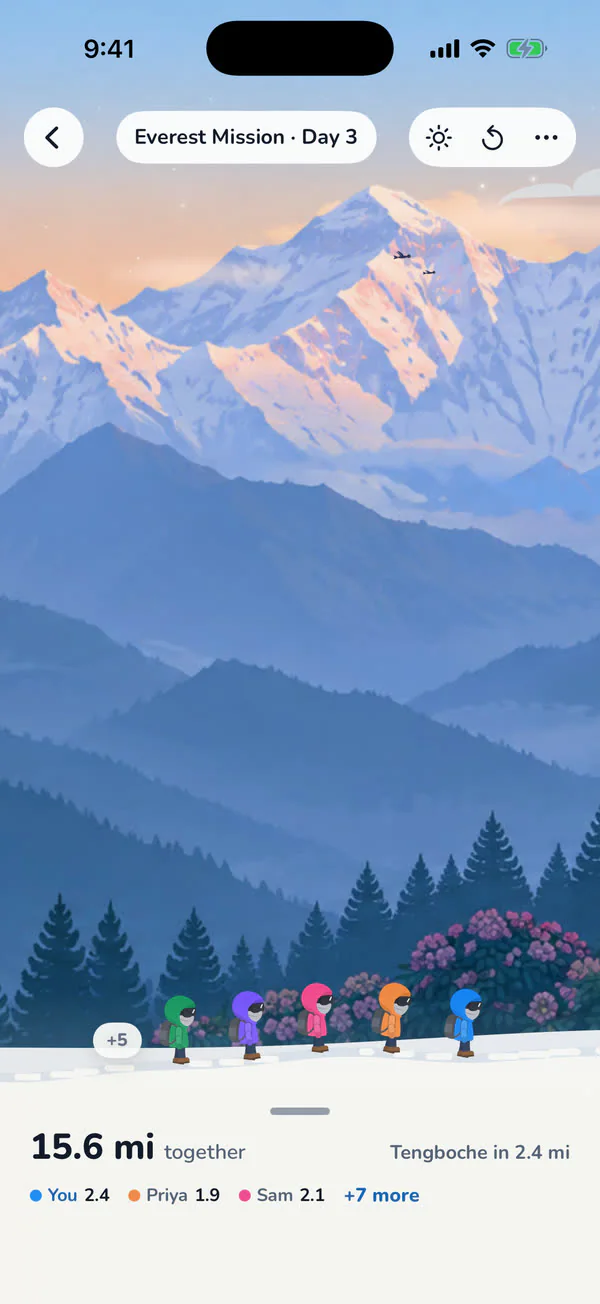
| Virtual journey | Walk the distance of a real route, such as a famous trail | Groups that want a story and a finish line to picture |
In Metriq the first four are the formats called Ranked, Race, Mission and Streak, and the virtual journeys are the trail campaigns: Everest (44.3 miles from Lukla to the summit), Mount Fuji (21 miles) and the Inca Trail (42.9 miles). For more ways to mix these up, see our 15 step challenge ideas.
How long does a step challenge last?
- A weekend or a few days: a sprint. Everyone goes all in, and nobody has time to fall too far behind.
- One week: the most common length, and the best one for a first challenge. Long enough for a comeback, short enough that the end is always in sight.
- Two to four weeks: typical for workplace challenges and habit-building streaks.
- Ongoing rounds: some groups run a new one-week round every week, which keeps the energy of a short challenge without stopping.
Metriq's free plan lets you create competitions of up to 7 days, Streaks included; Metriq Pro allows any length and can repeat a round on its own.
How the score is kept
Modern step challenges do not need anyone to write anything down. An iPhone counts steps with its built-in motion sensor whenever it is on you, and an Apple Watch counts them from your wrist. Both save their steps to Apple Health, which merges them so a walk recorded by both devices is counted once. A challenge app then reads the total from Health and updates the board.
Many challenges let you compete on something other than steps, which can make them fairer: distance, so long legs are not an advantage; exercise minutes, so a bike ride or a swim counts; calories; or flights of stairs climbed. Why your phone and your watch sometimes show different numbers is explained in Apple Watch vs iPhone step count.
Fair-play rules most groups agree on
- Real movement only. Walking, running and hiking count. Shaking the phone, or strapping it to a dog or a ceiling fan, does not.
- No hand-typed steps. Apple Health lets anyone add a step entry by hand. Agree up front that those do not belong in the challenge. In the Health app, Steps → Show All Data lists every entry and where it came from.
- One person, one account. No passing your phone to a teenager for the afternoon.
- Same rules for everyone on time zones. Decide whose midnight ends the day. In Metriq, a competition's days follow the time zone of the person who created it.
- Keep it light. The point is more walking. A forfeit like buying the coffee works better than a cash prize, and keeps disputes small.
Frequently asked questions
What is a step challenge?
A step challenge is a friendly contest where a group counts their steps over a set period, usually a week to a month, and compares results. You can win by walking the most, reaching a target first, keeping a daily streak, or hitting a shared goal as a team.
How do step challenges work?
Everyone carries a phone or wears a fitness watch, which counts steps automatically. A step challenge app reads those steps, from Apple Health on an iPhone, and keeps a live leaderboard until the challenge ends.
How many steps should a step challenge be?
For a one-week Race, 50,000 steps (about 7,000 a day) is a reachable target for most groups. For a Streak, pick a daily goal the least active person can hit, often 5,000 to 8,000 steps.
Is there a free step challenge app?
Yes. Metriq is free on iPhone with no ads: you can join any competition, and create two at a time of up to 10 people and up to 7 days. Metriq Pro, at $32.99 a year or $6.99 a month, adds up to 100 people, any length and repeating rounds.
Ready to run one? Read how to start a step challenge with friends, or for the office, the workplace step challenge guide. More about the app is on the step challenge app page.